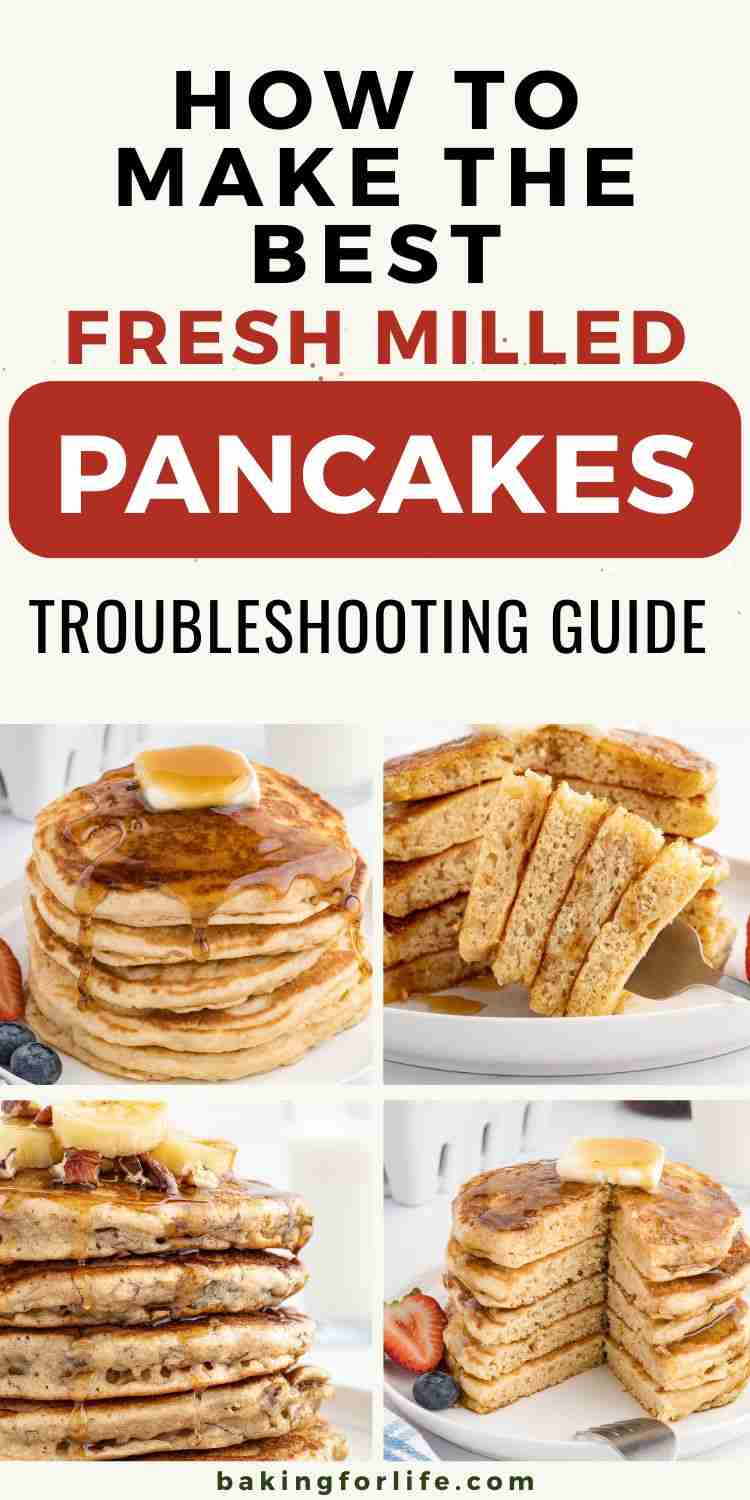
If you’re used to making pancakes with a pre-made mix or all-purpose flour, switching to fresh milled flour can feel surprisingly finicky. You might try one recipe and the batter seems way too thin. Then you make another and it’s thicker than you want. You add more flour or more liquid, but it never seems to work out as you expect.
In my experience, the trick to the best fresh milled pancakes is learning to read the batter, especially right after mixing, so you can get thick, fluffy pancakes every time.
If you want a recipe to practice with, my favorites are linked at the bottom. This post is all about getting the batter right.
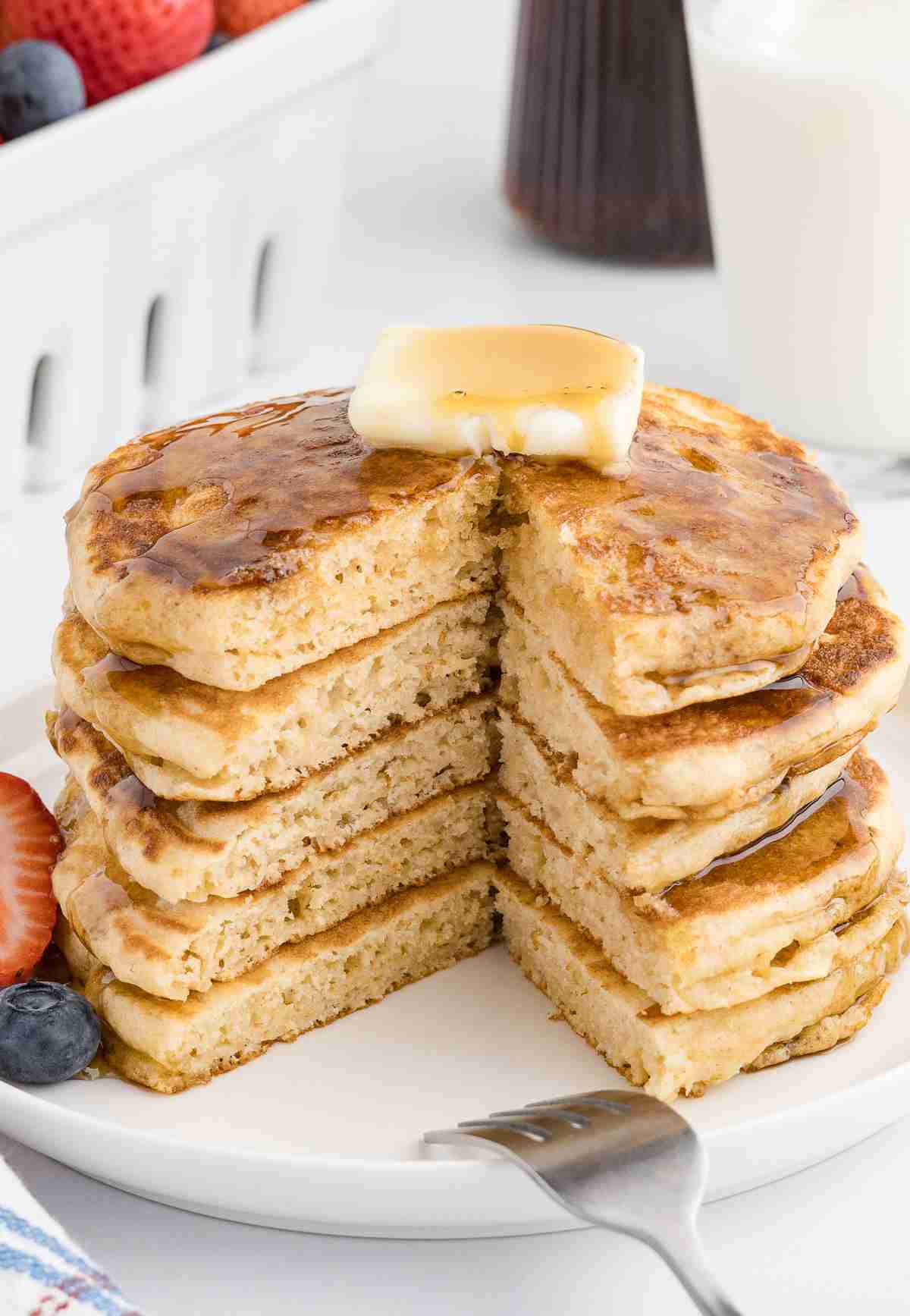
Honestly, pancakes are very straightforward. Whisk flour, leaveners, a bit of salt, and maybe sugar. Add an egg or two, a little butter or oil, plus some liquid, and you’ve got pancake batter. Here’s the thing though…a big part of pancake-making success is getting the flour to liquid ratio right. Once that’s dialed in, the other details are much easier to manage.
Basic Pancake Method
When trying a new flour or batch of grain, I suggest starting with a small batch recipe (about 6 pancakes) to test the flour to liquid ratio. My Fresh Milled Flour Pancakes recipe is a good place to start. However, if you already have a favorite recipe, you can absolutely use that. The basic process is the same:
- Whisk dry ingredients with leaveners, sugar (if using), and salt. If using cinnamon or other spices, mix in now.
- Add wet ingredients and whisk just until you don’t see streaks of egg, the flour is moistened, and the large lumps are gone.
- Allow batter to rest for 10-15 minutes while skillet or griddle preheats. After that, avoid stirring. It can deflate the batter and lead to flatter pancakes.
- Adjust the heat so a few drops of water dance on the griddle or skillet for a few seconds before disappearing.
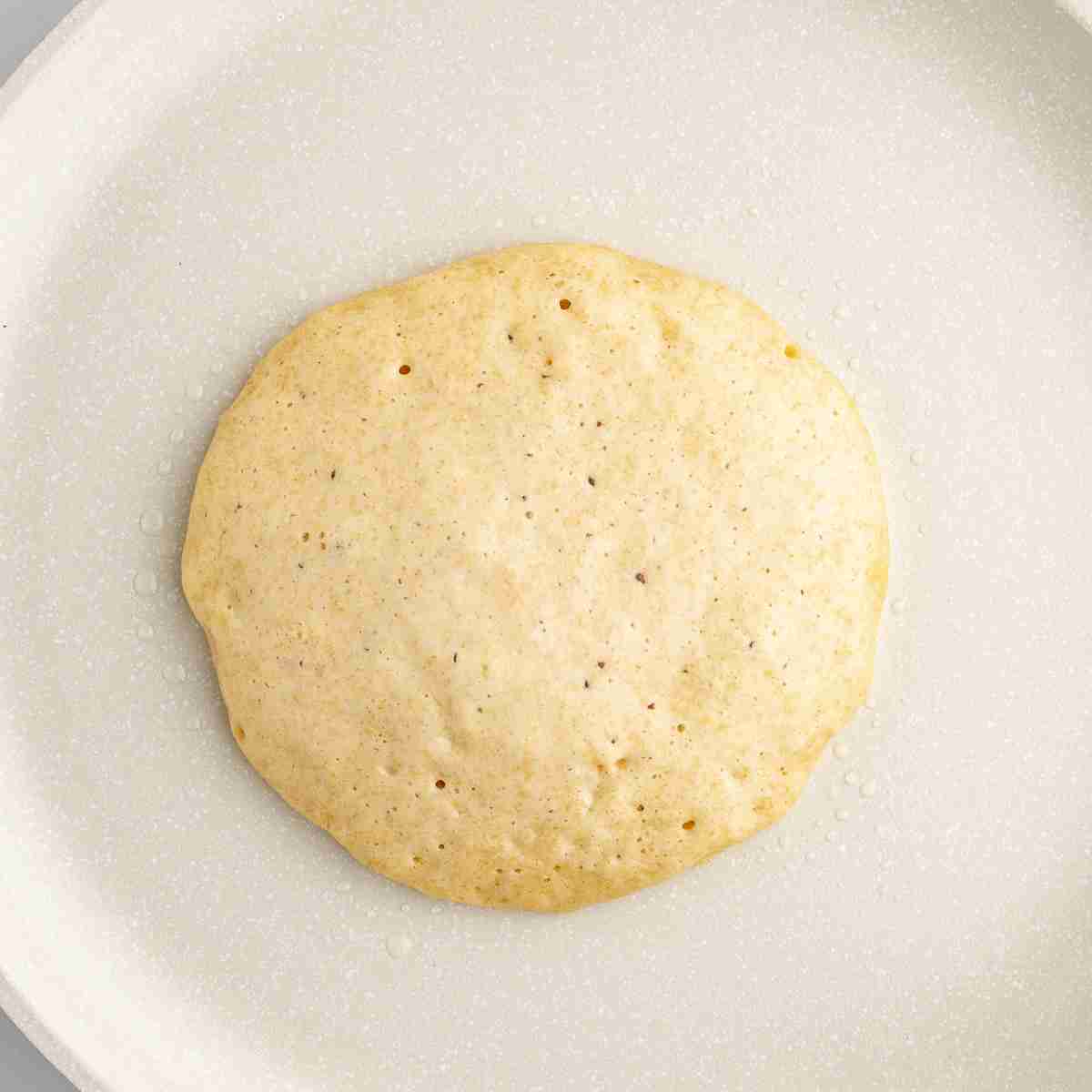
- Grease the griddle and pour batter, using whatever measuring implement you prefer. I like to use a 1/3 cup measuring cup. Cook until bubbles appear throughout and the edges look set. The bubbles near the edges will pop and leave little holes that stay open.
- Turn and cook until pancakes spring back when lightly touched. This typically takes another minute or two.
If your pancakes aren’t turning out how you want, it’s usually one of a few simple issues. Read on for troubleshooting tips and easy fixes.
Common Pancake Problems
- Pancake batter is too thin
- Pancake batter is too thick
- Pancakes have a gritty texture
- Pancakes are heavy and dense
- Pancakes taste too strong or “wheaty”
Pancake batter is too thin
What’s going on?
If the batter is thin and the pancakes spread out into wide, flat circles, you’ve got too much liquid for the amount of flour. With fresh milled flour, this can happen even when you measured correctly, because different grains absorb liquid differently. That’s why one person’s perfect recipe might not behave exactly the same in your kitchen.
Quick fixes
- Wait the full rest time first. If you haven’t rested the batter yet, give it at least 10-15 minutes and then reassess.
- If the batter is still too thin, you can try adding a bit more flour. I generally prefer to just go ahead and cook the pancakes but if it’s very thin, you can try adjusting the batter. You’ll have to judge how much depending on how thin the batter is. You might start with 2 tablespoons. Fold gently and let it sit a few more minutes. If it still looks thin after a few minutes, add 1 to 2 tablespoons more.
- Otherwise, go ahead and cook the pancakes but make them a bit smaller. Use less batter per pancake so they don’t spread as far. Even if they’re thin, the pancakes will taste just as good. Just pile up a stack and know next time they’ll be even better.
Next time, try this
- Hold back a bit of the liquid. Add most of it, then mix and determine whether you need more. Once you make a batch or two with the same recipe and flour, you’ll get a sense for how much liquid you’ll need for your perfect batter texture.
- Remember that the batter will thicken up as it rests. Also, the liquid you use can make a big difference. Batters made with milk start quite thin but thicken up quite a bit after resting. Batters made with buttermilk are thicker from the start but will thicken up even more as the flour absorbs the liquid.
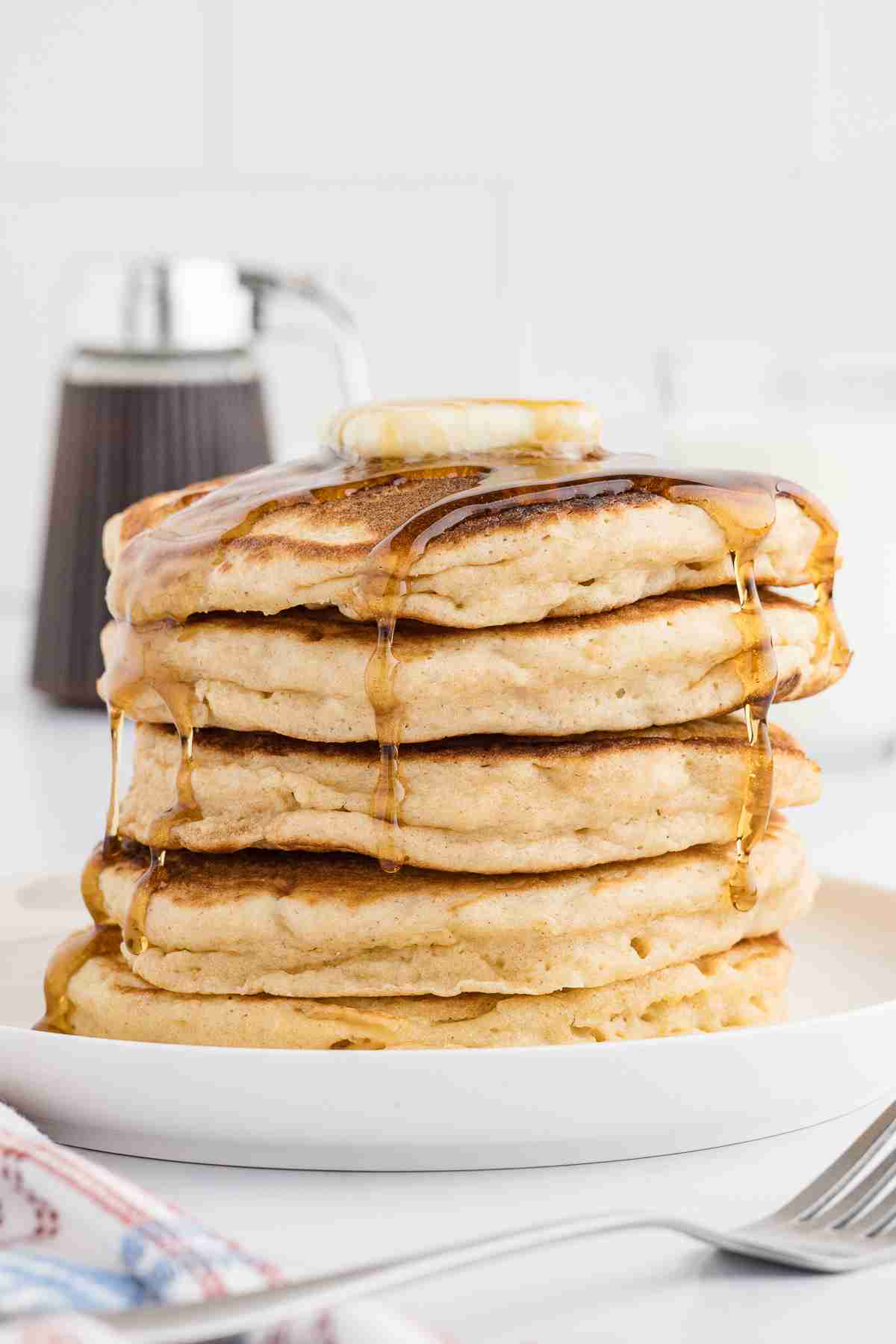
- When in doubt, aim for a bit thicker batter. I have found my pancakes come out tall, fluffy, and tender even if the batter is so thick I have to scoop it out of the measuring cup.
Pancake batter is too thick
What’s going on?
If your batter is so thick you have to scoop it out rather than pour it, you likely have too much flour for the amount of liquid. Or the batter may have sat longer and has thickened up more than expected. A thick batter isn’t necessarily a bad thing. Thicker batter can make taller, fluffier pancakes, but if it’s so thick that the pancakes won’t spread at all, you may need to adjust a bit.
Quick fixes
- Try cooking one pancake first. With a thick batter, use a scoop to portion it onto the skillet, or scrape out of your measuring cup with a silicone spatula. Then gently spread it out a bit using a spatula or the back of a spoon. You may not have to adjust the batter.
- If the batter is just too thick, add a small amount of liquid. Start with 1–2 tablespoons of milk or whatever liquid you are using and fold gently. Let it sit 2–3 minutes before deciding if it needs more. I find that any adjustments after the rest time can deflate the batter so only adjust if you really need to.
- Cook a touch longer at a slightly lower temperature. Thick batter may need a little more time to cook through without browning too fast.
Next time, try this
- After the initial mix, does the batter seem thick already? If it’s already close to your ideal pancake batter texture, realize it will only thicken up more. Add a bit more liquid and stir gently.
- Be open to experimenting a bit with the proportion of flour to liquid. My perfect pancake batter texture might be thicker than what you prefer. Make a note of how much liquid you used so you can adjust next time if needed.
- Use a small batch recipe if possible to nail down your perfect amount of flour to liquid before making a larger batch. A small batch recipe will typically have one egg. Realize that each type of grain will behave slightly differently. Soft white, spelt, and Kamut all behave a little differently. Even the same grain can change with growing conditions, storage, and humidity.
Pancakes have a gritty texture
What’s going on?
With fresh milled flour, “gritty” usually means the bran particles are a bit too large or haven’t had enough time (or moisture) to fully soften. If you have allowed enough rest time and your batter consistency seems right, it’s possible your flour was milled a little coarser than ideal for pancakes. The pancakes will still taste great, but the texture may be more hearty than tender.
Quick fixes
- Rest the batter a little longer. If you’ve already rested the batter but it still feels gritty, give it another few minutes (without mixing) before cooking the rest. The bran may soften enough to noticeably improve the texture.
- Reduce the heat a bit and cook a little longer. Grittiness might be more pronounced if pancakes brown too quickly before the inside fully cooks and softens.
Next time, try this
- Stick with soft grains for the smoothest texture. So far, I have only used soft white wheat for pancakes but I have heard from readers who have used spelt and Kamut with good results. If you want to use a different grain, try mixing a bit with soft grains until you find the sweet spot.
- Mill a little finer for pancakes, if possible. I’ve heard of people who run their milled flour through a blender to get it finer. Others run their flour through the mill a second time (though not all mills allow for this). For my part, I use soft white on the finest setting on my Mockmill and have no issue with grittiness.
- Sift the flour. A last resort for sure, as sifting can be a bit of a pain and most home millers object to taking out any part of the grain. However, sifting doesn’t necessarily mean you have to discard any part of it. Some people say just the process of sifting and then whisking back the bran into the flour will give a lighter result. I haven’t actually tested this but it may be worth a try.
Pancakes are heavy and dense
What’s going on?
Dense pancakes usually come from one (or a combination) of three things: the batter is too thick, the leavening isn’t doing its job, or the batter was mixed too much. With fresh milled flour, pancakes can turn dense if the flour absorbs more liquid than expected during the rest, or if you’re using a heartier grain that naturally bakes up a little heavier. With any pancake batter, overmixing can lead to tough pancakes.
Quick fixes
- Don’t overmix the batter. If you normally mix to the point of getting all the lumps out, stop mixing sooner. Small lumps are fine. Overmixing can make pancakes tougher and heavier.
- Make sure your leavening is fresh. Old baking powder won’t help you get light, fluffy pancakes. If you’re not sure, test your baking powder before using it again.
- Cook at the right temperature. If the skillet is too cool, pancakes can set slowly, which can lead to heavy or dense texture.
Next time, try this
- Use soft grains for pancakes. I typically use soft white wheat, but other readers have reported using spelt, Kamut or a blend of grains with success.
- Avoid overmixing. Mix just until you can’t see streaks of egg, flour is moistened and large lumps disappear. Small lumps are totally fine.
- Test your baking powder and replace if needed. To test, mix 1 teaspoon baking powder in 1/4 cup hot water. If you see an immediate bubbling or fizzing reaction, it is fresh and will work fine. If it shows little to no activity, it’s best to replace.
- Cook at the right temperature. Medium heat is usually best. If your skillet is too cool, pancakes can set slowly and turn heavy. If it’s too hot, they brown before the center cooks through.
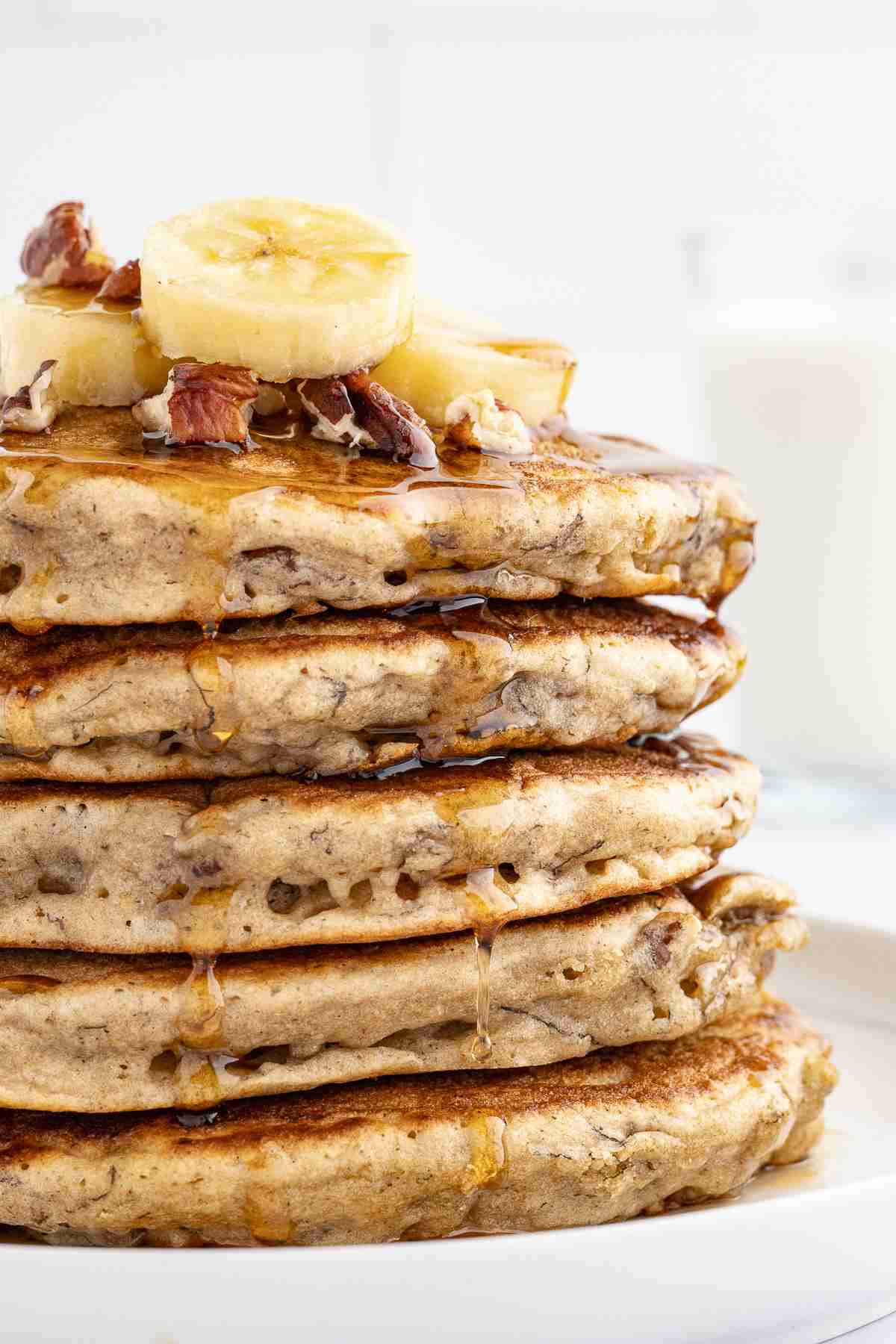
Pancakes taste too strong or “wheaty”
What’s going on?
Fresh milled flour has all of the wheat berry, so the flavor naturally comes through much more than all-purpose flour. If your pancakes taste “too wheaty,” it may be that you haven’t adjusted to the taste of true whole wheat. However, grains do taste different so if you don’t prefer the taste of one, try a different grain. Soft white, spelt, Kamut, and einkorn are grains typically used in pancakes. Keep in mind, the flour to liquid proportions may need to be adjusted for each one.
If you’re using a stronger-flavored grain, such as hard red, and you don’t love the flavor in pancakes, try using a milder soft grain instead.
Quick fixes
- Transition slowly. Try mixing 25% fresh milled flour and the rest all-purpose to help transition your taste. If that works well, try 50/50 next time and so on until you find the sweet spot. It’s very likely you will come to enjoy the taste of 100% fresh milled flour pancakes. If not, even a partial swap still adds more fiber and nutrients.
- Don’t over-brown them. If the outside is getting dark, lower the heat a bit. Over-browning can make the whole-grain flavor taste stronger.
- Serve with something creamy or sweet. Butter, syrup, nut butter or other toppings can help mellow the taste if you’re not quite adjusted yet.
Next time, try this
- Use soft white for the mildest flavor. It’s naturally milder and less “wheaty” than hard red.
- Try different grains. You may prefer the taste of spelt, einkorn or Kamut instead of soft white.
- Blend your grain. If you want to experiment, try a simple blend, like 75% soft white and 25% spelt, and note how it changes the flavor.
- Add a warm flavor note. Cinnamon, vanilla, or a touch of sweetener can help the pancakes taste more traditional.
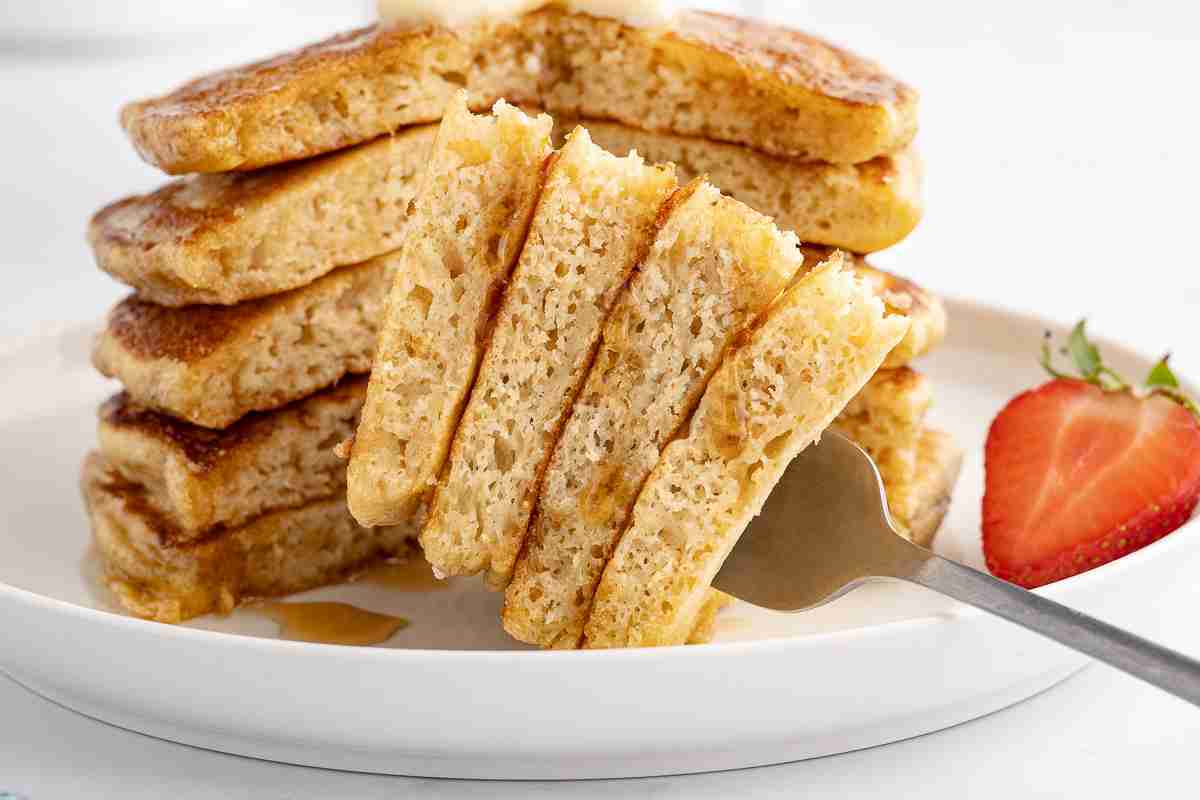
If you take away one thing from this post, let it be this: follow the recipe, but adjust as needed. Fresh milled flour absorbs differently depending on the specific grain and how fine it’s milled, so the “right” batter is the one that gives you thick, fluffy pancakes in your kitchen. When you’re dialing things in, make a small batch, see how the batter behaves after it rests, and take a quick note so you can adjust next time. You’ll find your perfect ratio faster than you think.
And if you want a recipe to put these tips into practice right away, I’ve linked my favorites below.
Related Pancake Recipes
Fresh Milled Flour Pancakes – A simple pancake batter made with milk.
Buttermilk Pancakes – A classic pancake made with buttermilk and fresh milled flour.
Banana Nut Pancakes – A fun variation made with fresh milled flour.
Pin This for Later