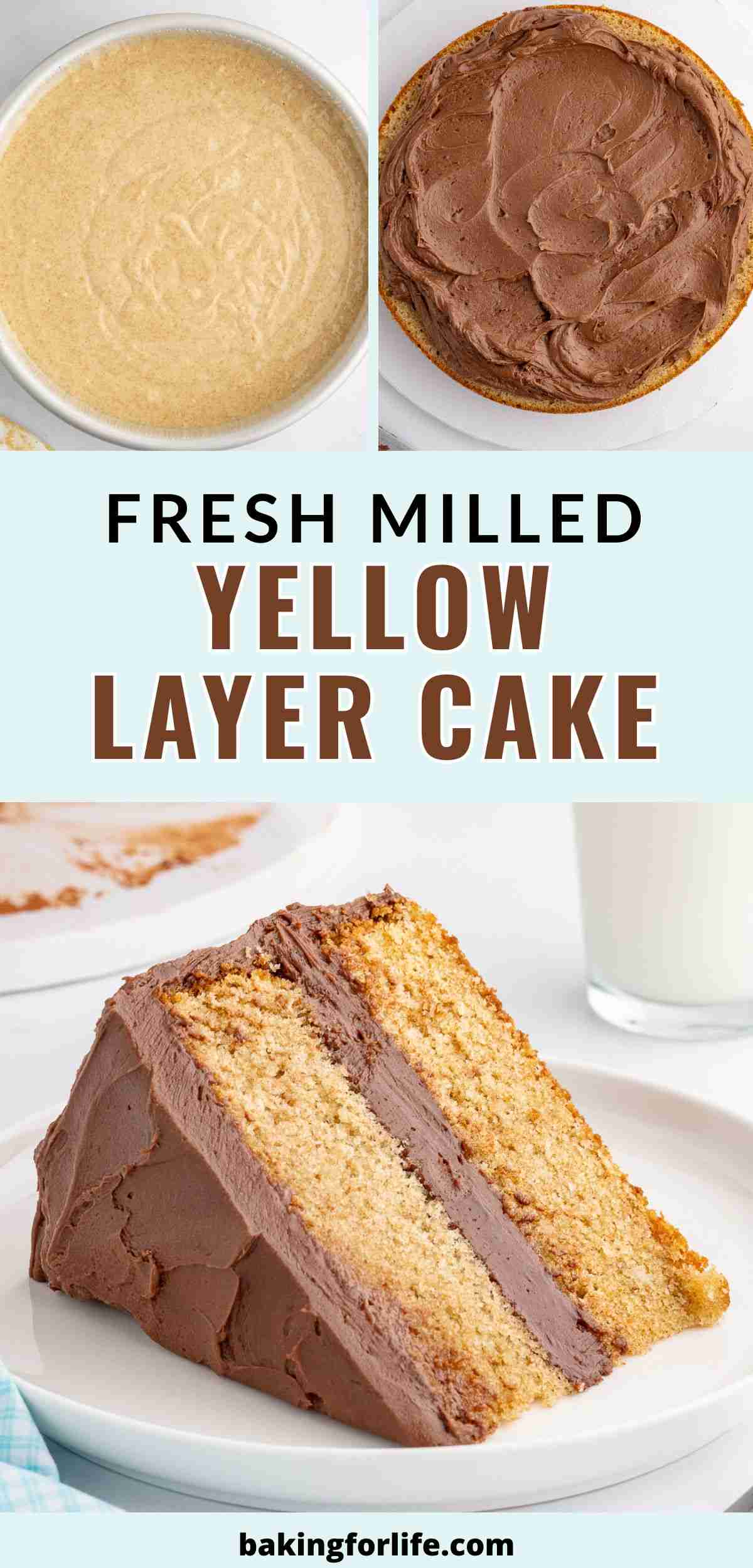
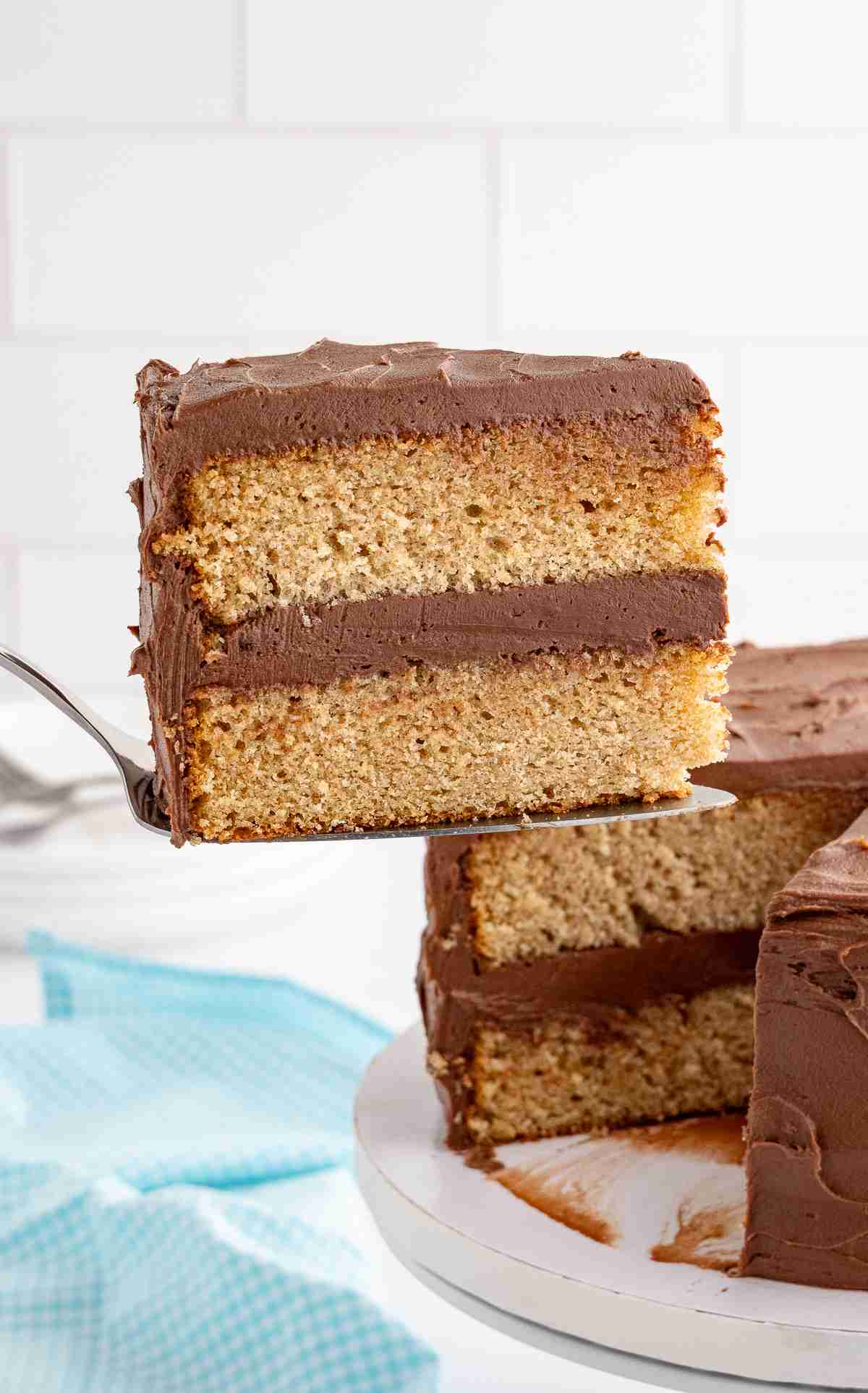
There’s something about yellow cake with chocolate buttercream that just feels like a celebration. Maybe it’s the buttery vanilla cake, the thick layer of chocolate frosting, or the fact so many of us grew up requesting it for our birthdays. It’s simple, familiar, and classic for a reason.
A good yellow cake should be soft and tender with a fine crumb, plenty of buttery vanilla flavor, and enough structure to hold a generous swirl of frosting. This is not the easiest thing to do with whole wheat, especially fresh milled. I won’t promise light and fluffy “box mix” cake but this cake is exactly where I want it to be.
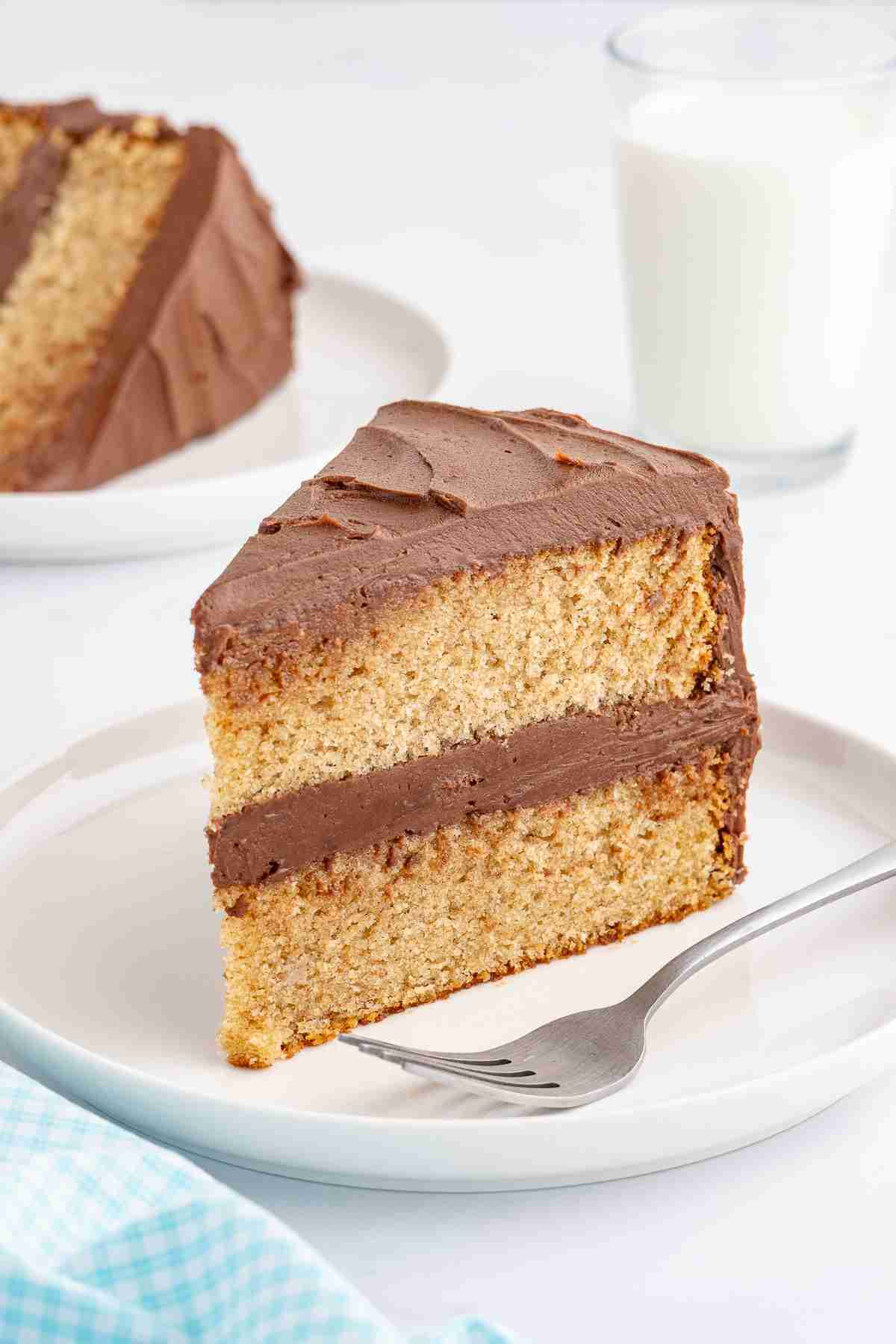
One of my favorite things to bake is a layer cake. I love playing around with different fillings, frostings, and flavors, but so many of those cakes start with the same thing: a really good vanilla cake. Having a simple plain cake recipe I can rely on gives me a blank canvas for whatever combination I want to make.
This hasn’t been an easy thing to do with fresh milled flour. I tried multiple recipes and variations over the last couple of years, and the texture was never quite right. I had much better luck with my Chocolate Sheet Cake with Fresh Milled Flour, which I’ve been making for a while now. More recently, I had success tweaking that chocolate cake recipe into soft and moist Fresh Milled Chocolate Cupcakes. But yellow cake turned out to be a whole different challenge.
Fresh Milled Yellow Cake Recipe
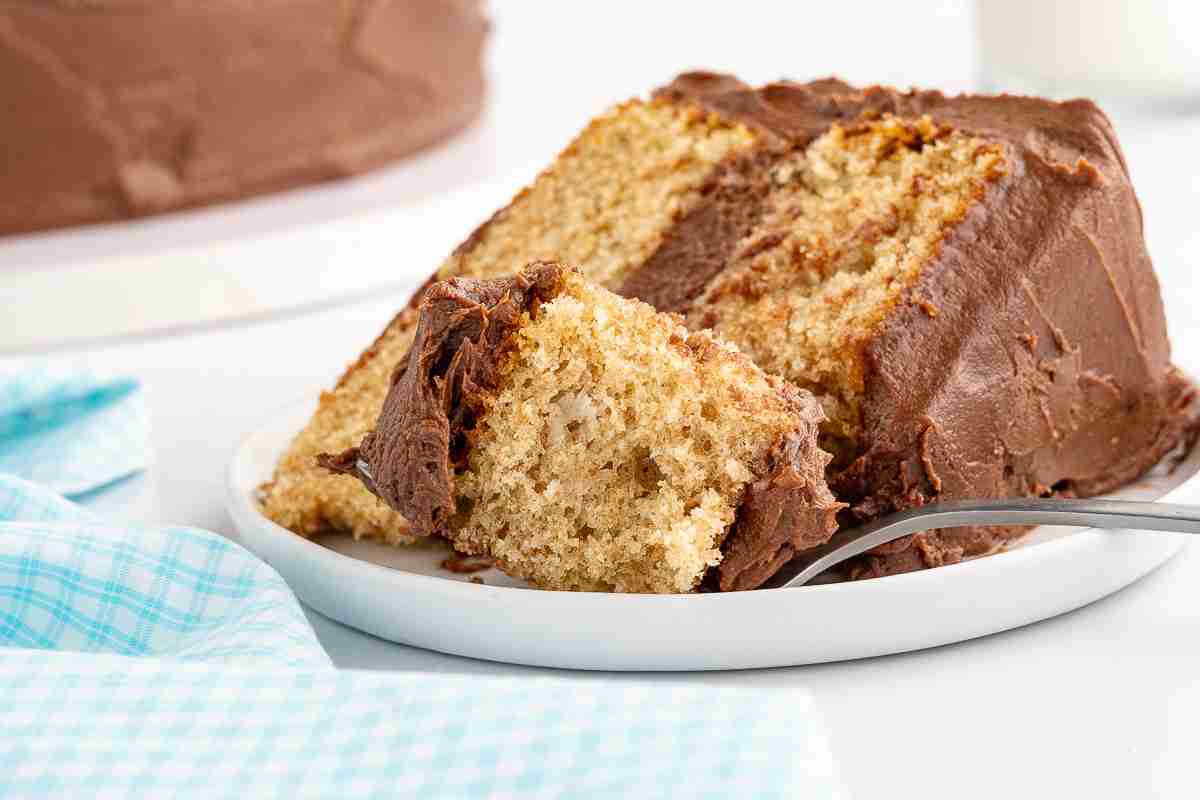
If you have also been searching for a fresh milled plain yellow cake, read on. This cake has a tender crumb and texture, with the benefits of freshly milled flour. No, it won’t have the super light and fluffy texture you are used to with cakes made from all-purpose or cake flour. It’s whole wheat after all! But you can get a delicious cake with fresh milled flour so let’s celebrate that.
This post is all about the cake itself. I paired it with my Easy Chocolate Buttercream but it will go perfectly with whatever frosting or buttercream you like. During my testing, I also tried it with a cinnamon buttercream I had left over from another cake and that was delicious.
Should you sift?
Let’s talk about it. Sifting is such a divisive topic in fresh milled discussions. Some people are very much opposed to it, while others are fine with it for certain things. I’m all about flexibility, so I’m totally fine with sifting when needed. That said, I rarely bother. It’s too much of a pain, and I don’t find it necessary for most things.
But for cake? I’m ok with sifting if that is what it takes to get the best texture. I tested this recipe with soft white and einkorn flour, both milled on the finest setting. Ultimately, I found if I use soft white, I prefer the texture of the cake with sifted flour. With einkorn, I think it works well even without sifting. So if you’re very opposed to sifting, I would recommend einkorn flour, milled as fine as you can get it out of your mill.
Now, let’s talk about the actual sifting process. In this case I’m talking about just using a regular mesh strainer and running the flour through that. At least, that is what I did. I do have round flour sifters but find them too messy so I don’t bother with those. If you plan to sift your flour, you can use any method you’re comfortable with. And if you use soft white and choose not to sift, that’s ok too! The cake will still turn out, it will just have a bit coarser texture.
Tips for Success
- Use a kitchen scale to measure the flour. Volume measurements can be unreliable with fresh milled flour.
- Use room temperature ingredients. It really makes a difference to the texture and rise of the cake.
- Prepare your pans well. Grease and flour the pans, or try homemade cake release for an easy, mess-free release.
Ingredients
Key Ingredients
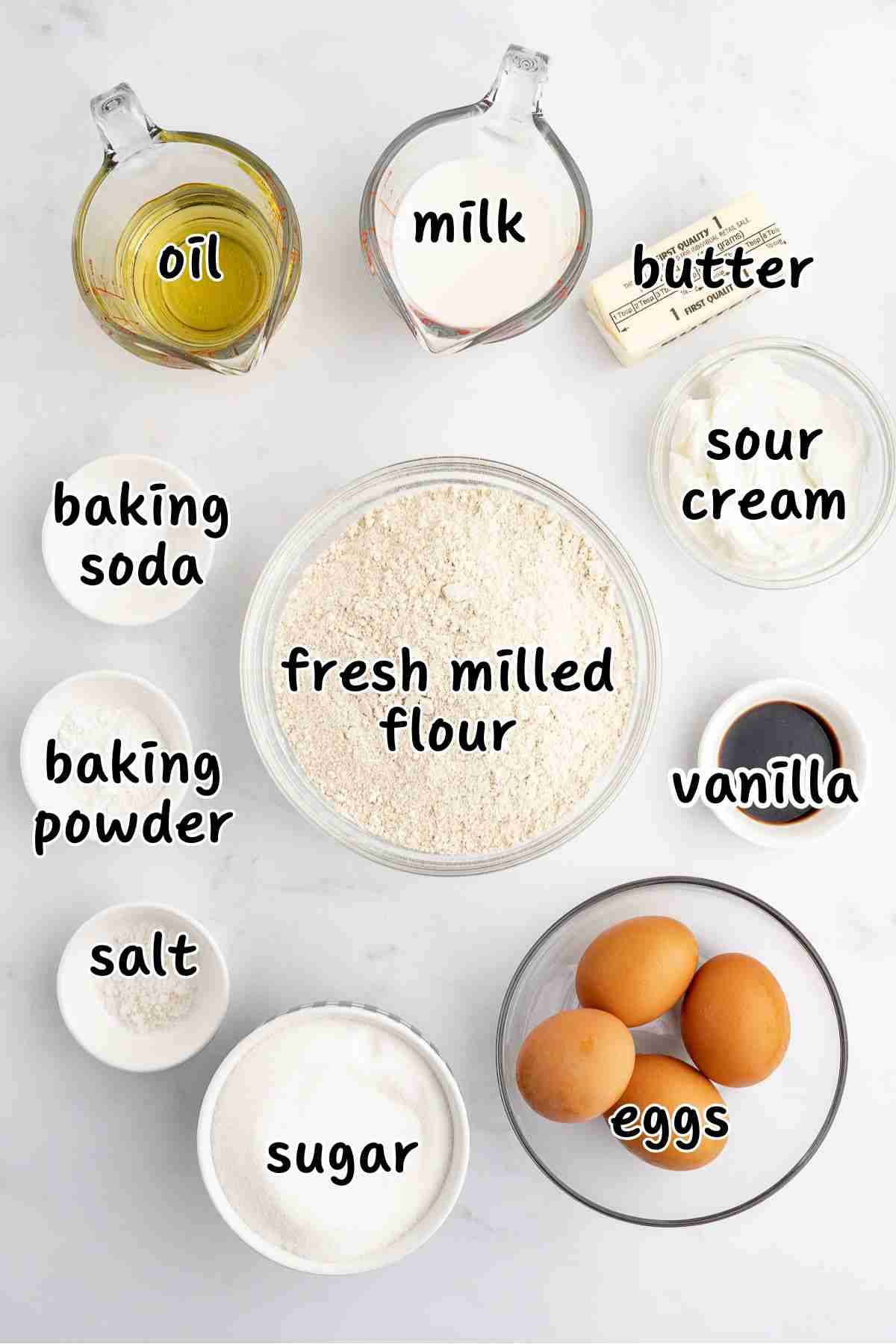
Flour: I used fresh milled 100% unsifted einkorn flour for the cake pictured. I also tested with soft white, which works well too, but I liked the texture better when I sifted out the larger bran pieces first.
Butter: I used one stick regular salted butter.
Oil: I used avocado oil but any neutral oil will work well. If you prefer an all-butter cake, you can omit the oil and double the butter.
Sugar: I wanted to keep this one as close as possible to traditional cake so I stuck with the standard white sugar. I haven’t tried this with sucanat, coconut sugar or other natural sweeteners at this point.
Eggs: I used large eggs. Room temperature is best. If you forget to set them out, just put them in warm water for a few minutes while you ready everything else. By the time you need them, they’ll be good to go.
Sour Cream: Adds richness and moisture while helping create a soft, tender crumb, which is especially helpful when baking with fresh-milled flour. You could also swap for plain yogurt if you prefer. Room temperature is best. If you forget to set out, you can microwave for 10 seconds once or twice, stirring in between.
Milk: I used regular whole milk. 2% would also work fine. As with the other fridge ingredients, room temperature is best. If needed, you can warm in the microwave for 10-15 seconds.
Other Ingredients: You’ll also need regular pantry ingredients including baking powder, baking soda, salt, and vanilla.
Instructions
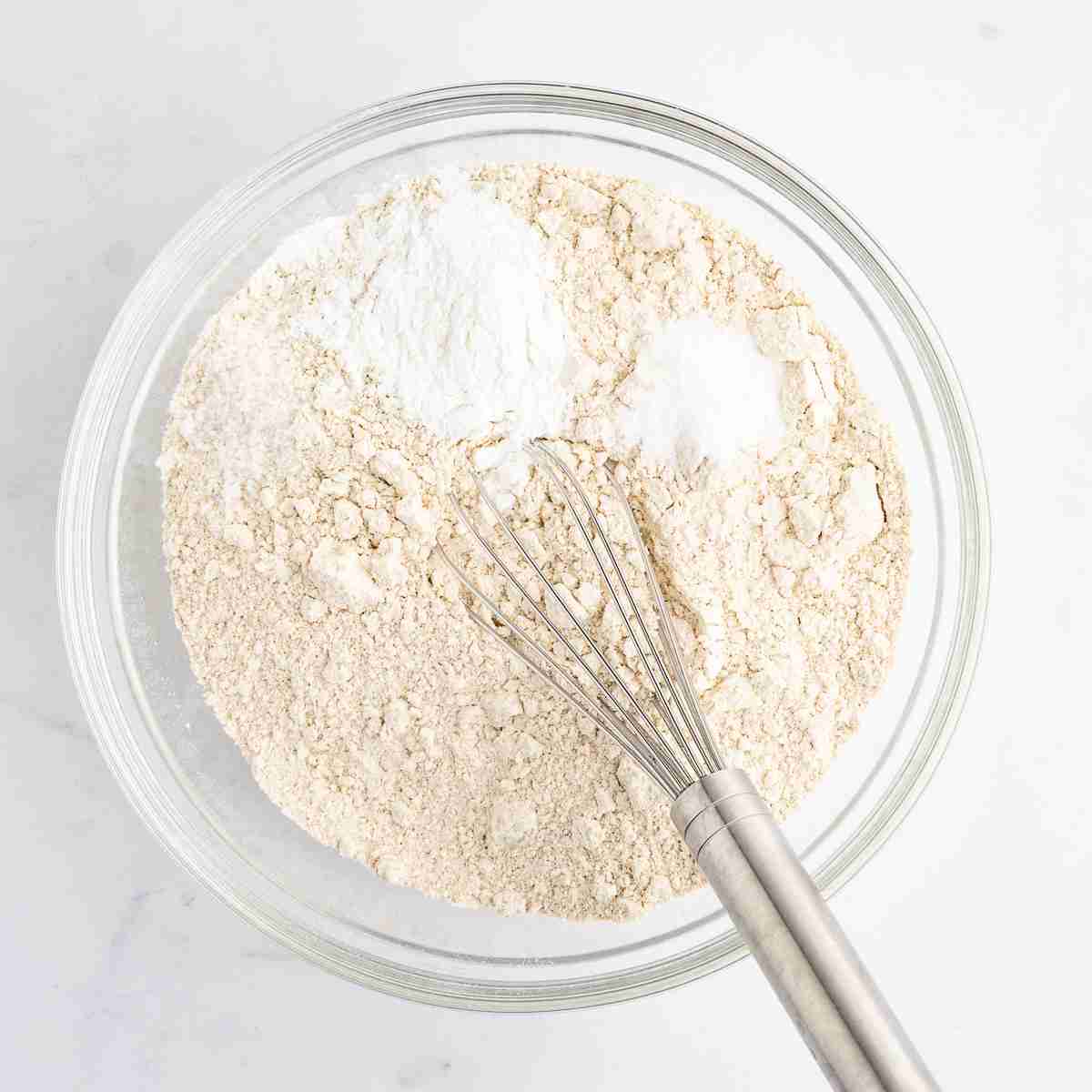
Step 1: Whisk dry ingredients together. Set aside.
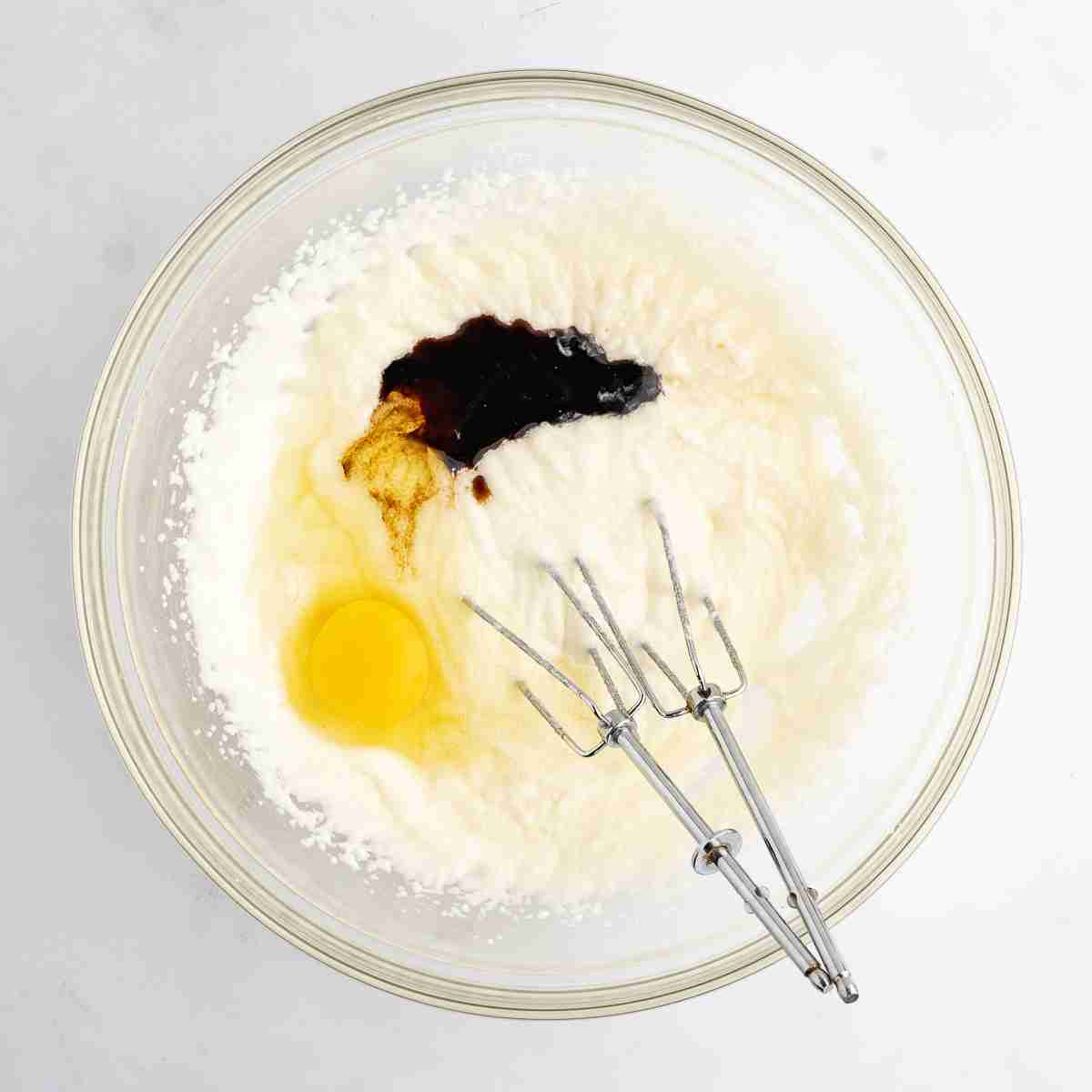
Step 2: Cream butter, oil and sugar. Add vanilla and eggs, one at a time, beating well after each addition.
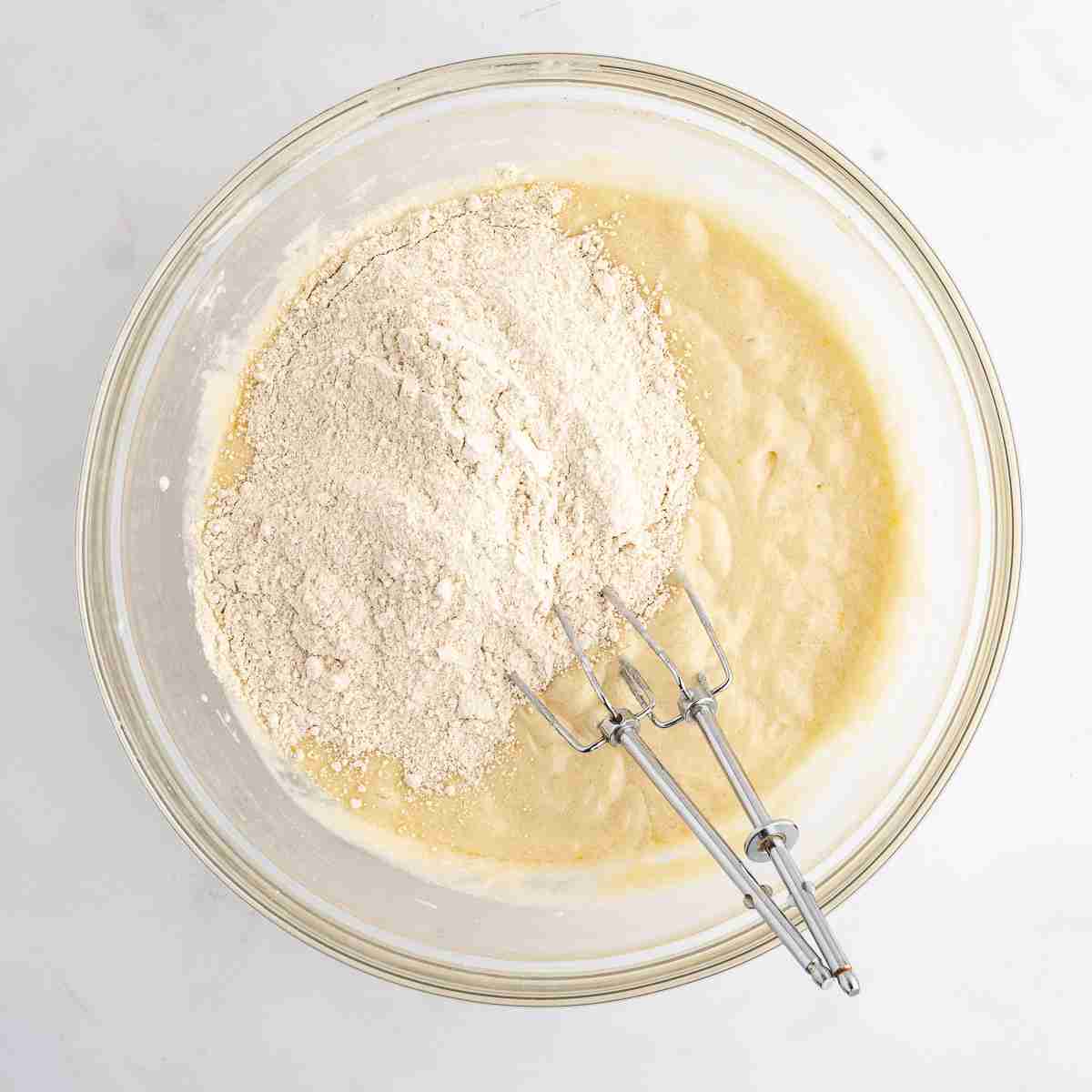
Step 3: Add about one third of the flour and mix to combine.
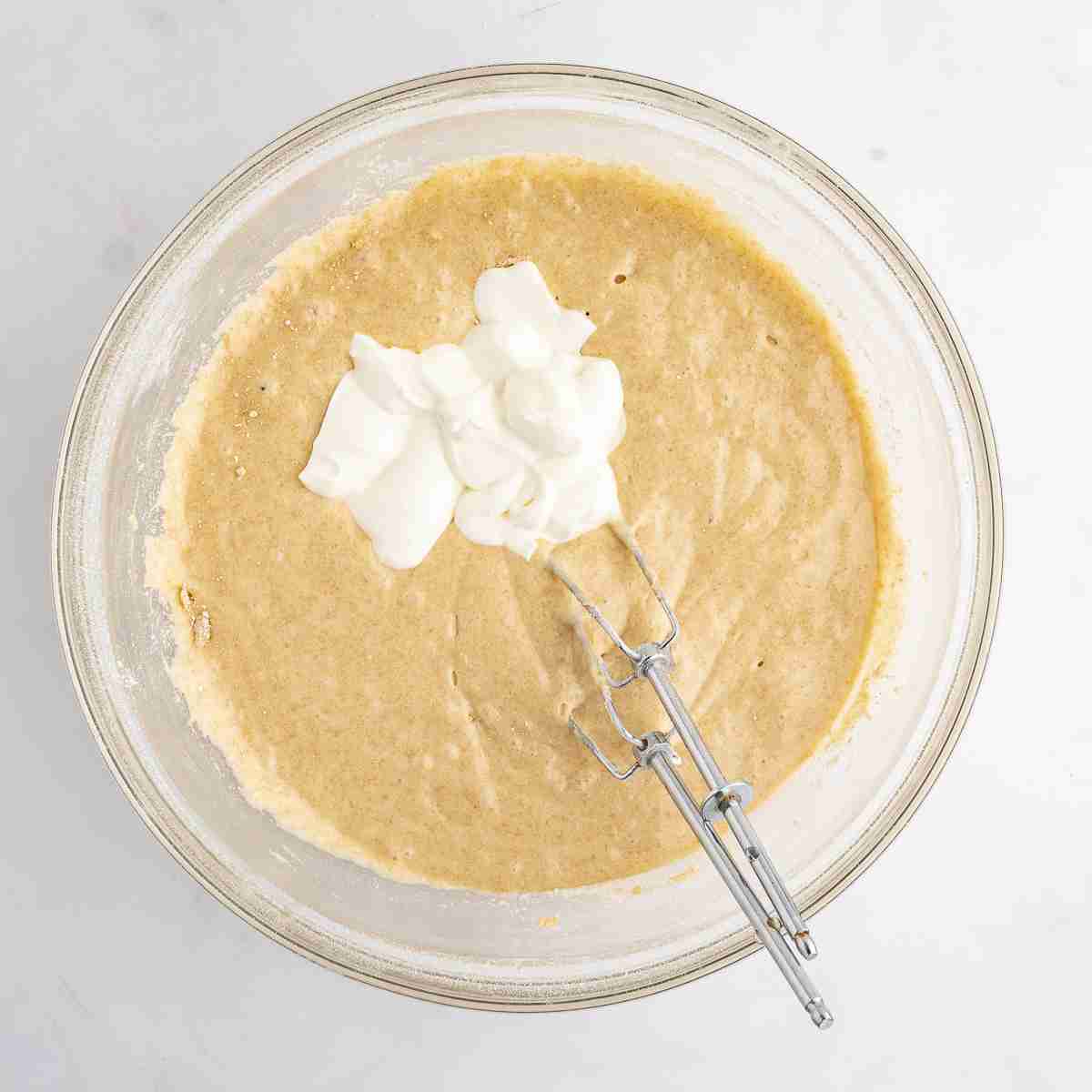
Step 4: Add the sour cream and mix to combine, then add another third of the flour.
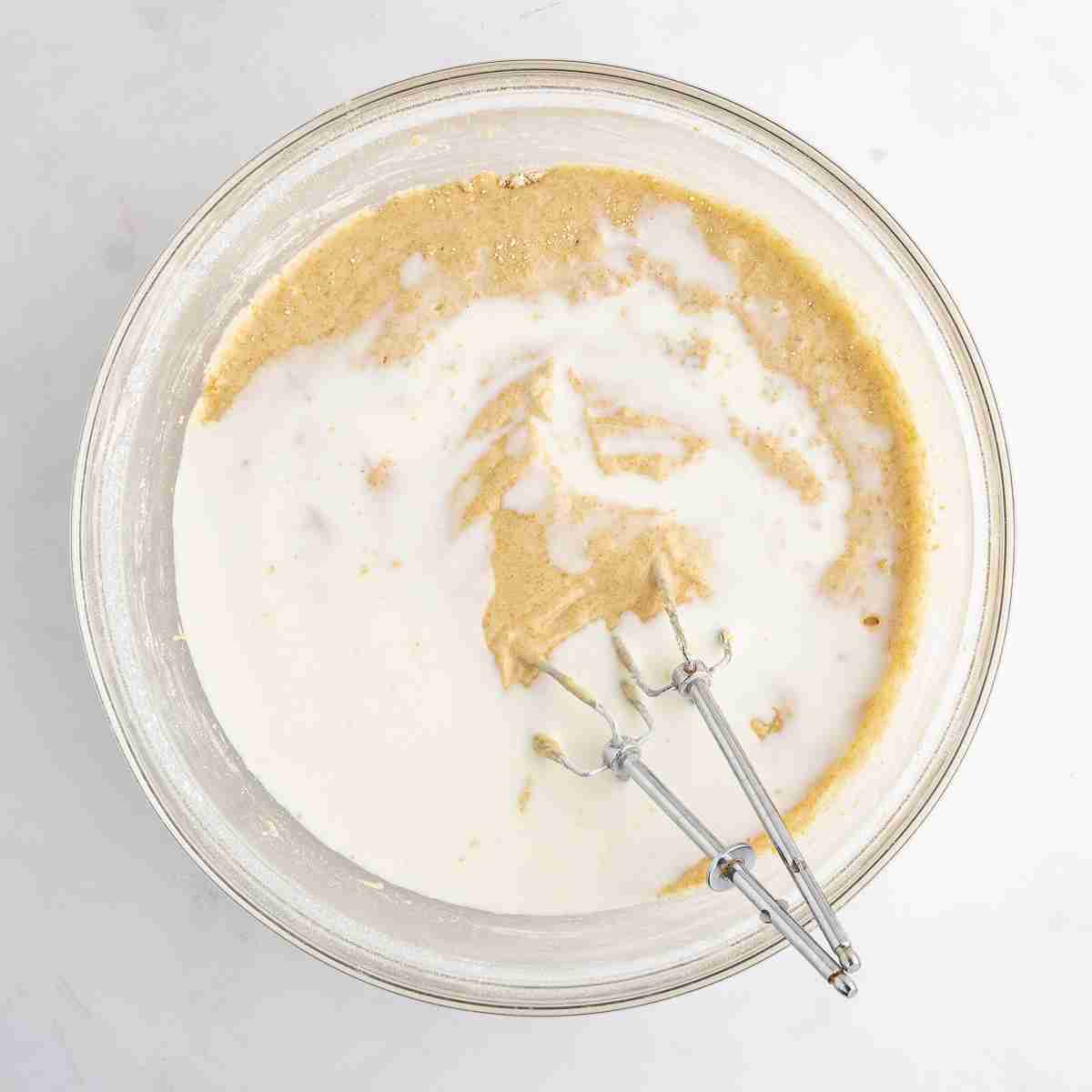
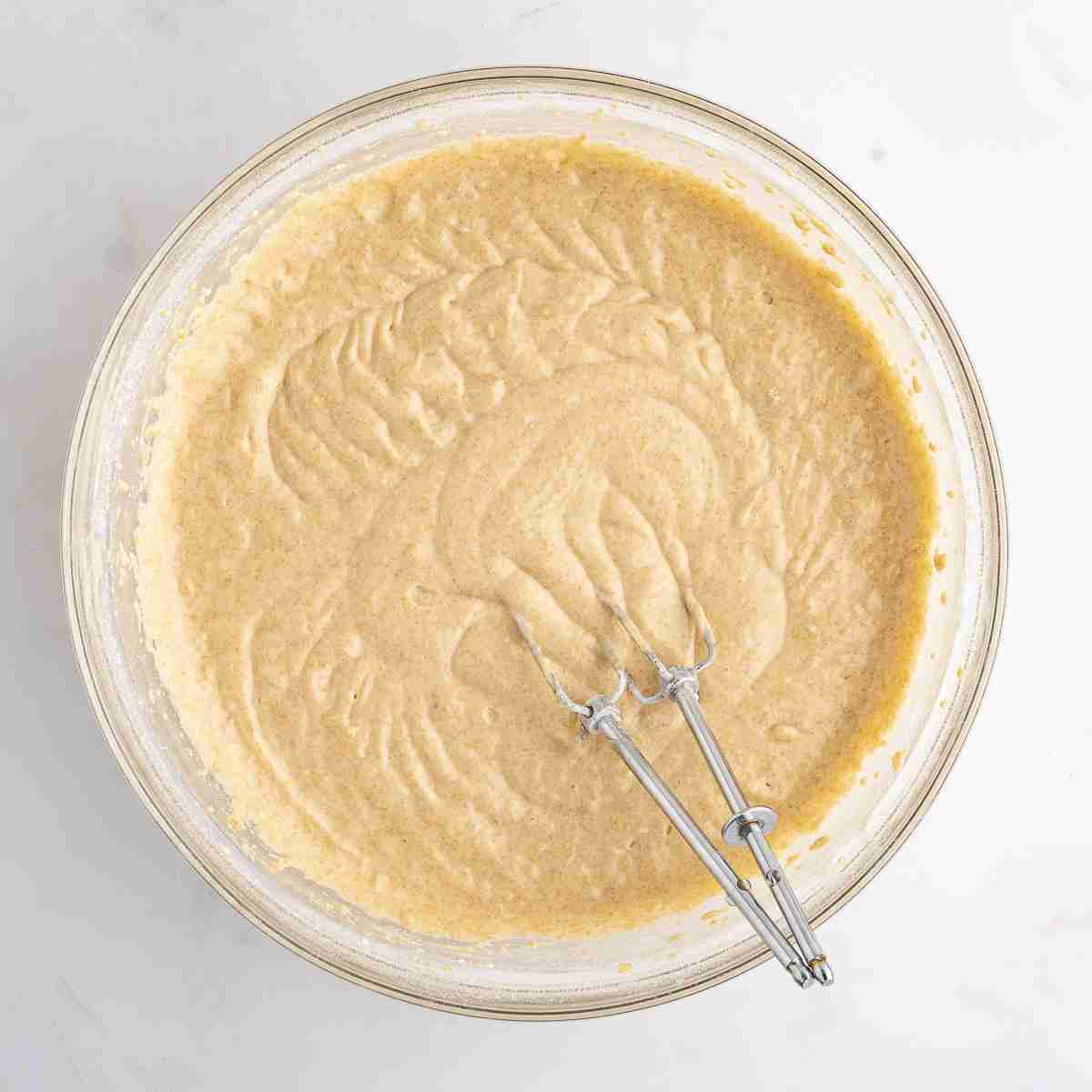
Step 5: Add the milk and mix to combine, and then add the rest of the flour.
Step 6: Mix on low until flour is combined.
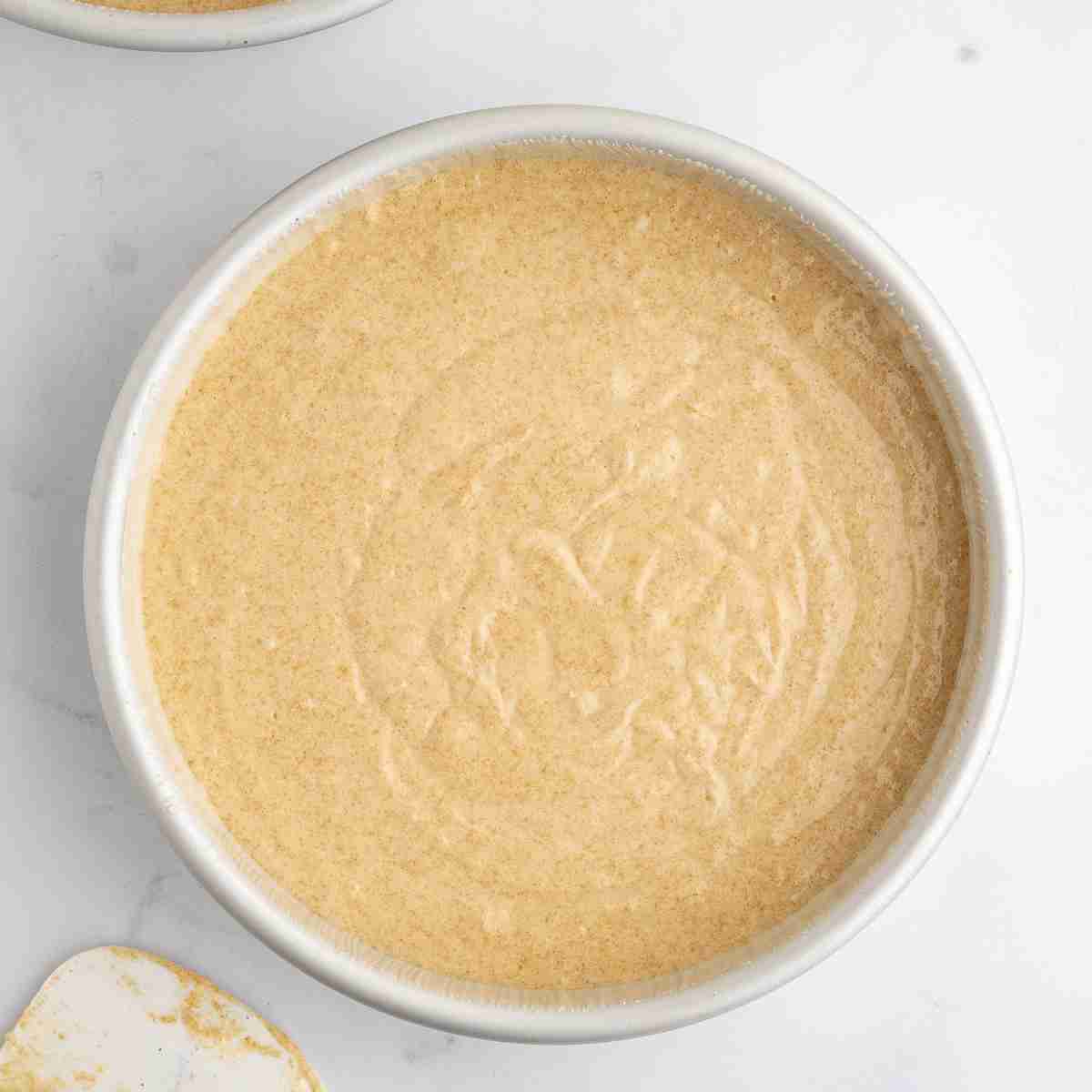
Step 7: Pour batter into prepared pans.
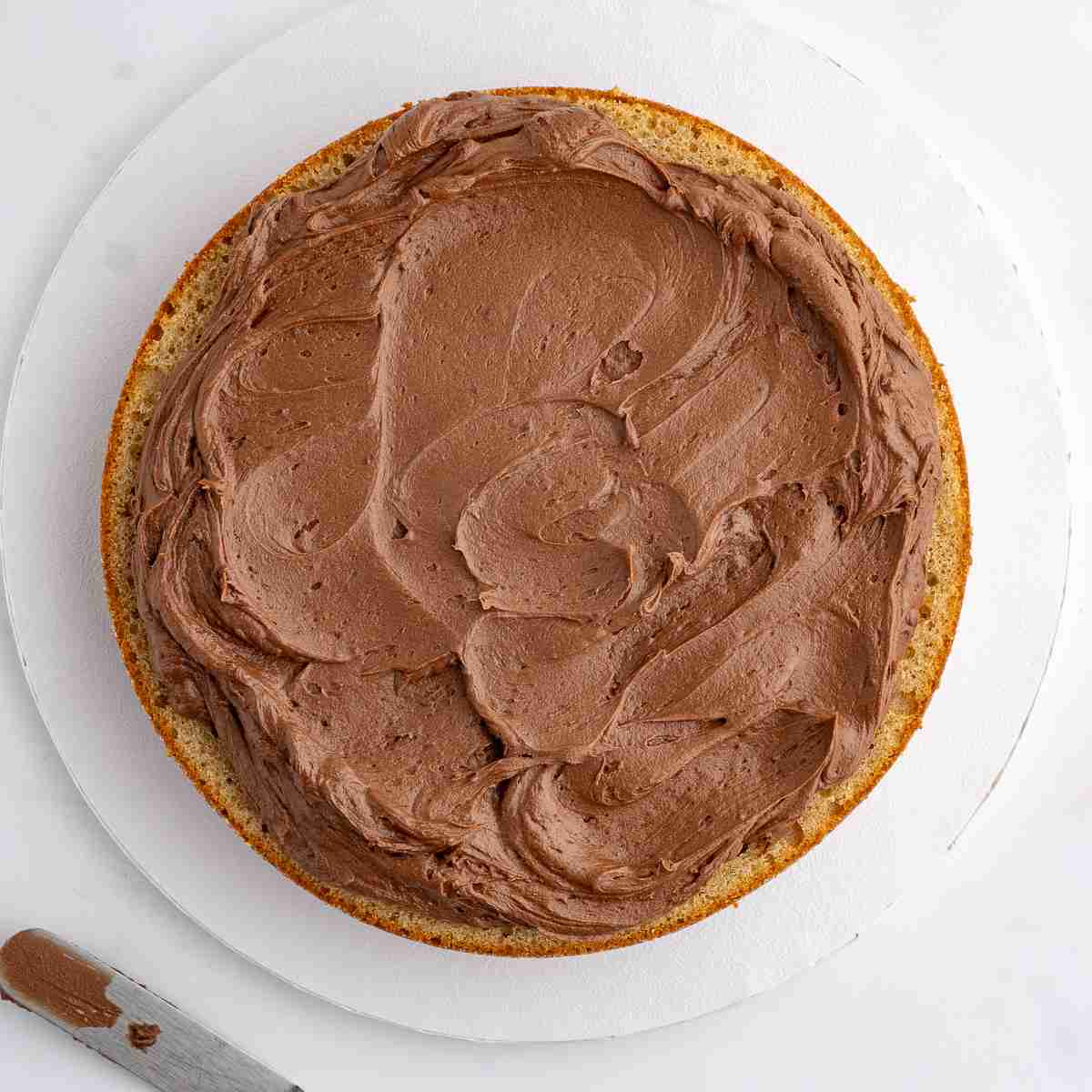
Step 8: Once cool, spread buttercream on bottom layer and then stack second layer. Frost cake as desired.
When is the cake done?
Fresh milled cakes don’t give you that classic spring back when you touch them. Instead of bouncing back, the top will hold the indentation, which can make it look underdone even when it’s not. Trust the toothpick test here. If it comes out clean, pull the cake, even if the top still looks a little dented from your touch. You’ll also notice the edges start to pull away slightly from the pan when it’s ready.
FAQs
Can I make an all-butter cake?
Yes, you can. I love the flavor of all butter, but I like the extra tenderness that oil brings to the cake so I usually do half and half.
Can I skip the sour cream?
Yes, you can swap in regular yogurt. I haven’t tried using all milk or buttermilk in this. If you try it, I would love to know how it turns out.
Can I make this in a 9×13 pan?
Yes, I tested in 9×13 pan and it works perfectly. Increase the bake time to 38-42 minutes.
Other Recipes You Might Like:
Chocolate Cake with Fresh Milled Flour
Fresh Milled Flour Granny Cake
Fresh Milled Yellow Cake

Ingredients
- 300 grams fresh milled einkorn or soft white flour, milled fine (see notes)
- 1½ teaspoons (6g) baking powder
- ½ teaspoon (3g) baking soda
- ½ teaspoon (3g) salt
- ½ cup (1 stick) butter
- ½ cup (100g) neutral oil, I used avocado oil
- 1½ cups (300g) sugar
- 4 large eggs, room temperature
- 2 teaspoons (8g) vanilla extract
- ½ cup (120g) sour cream, room temperature
- ½ cup (120g) milk, room temperature
- Easy Chocolate Buttercream or your preferred frosting or buttercream (see notes)
Instructions
- Preheat the oven to 350°F. Grease and flour the 2 8” or 9” pans or brush with homemade cake release.
- Whisk together the flour, baking powder, baking soda and salt in a medium bowl. Set aside.
- Cream together the butter, oil, and sugar in a large mixing bowl with an electric mixer until light and fluffy. Add vanilla and then the eggs, one at a time, beating well after each addition and stopping to scrape the sides and bottom of the mixing bowl once or twice.
- Add one-third of the flour mixture, mixing at low speed until incorporated. Add the sour cream and mix until well combined. With mixer on low speed, add another third of the flour mixture, and mix until combined. Add the milk and mix to incorporate, scraping side and bottom of bowl. Add the remaining flour and mix until everything is well combined. The batter will be thick and fluffy.
- Allow batter to rest for about 5-10 minutes.
- Pour the batter into the prepared pans, dividing the batter equally. Bake at 350°F for 28-32 minutes or until toothpick inserted in center comes out clean. You might notice edges are just starting to separate from pan. Remove from the oven and set on cooling racks.
- Allow the layers to cool for about 10 minutes in the pans before turning out onto cooling racks. Cool completely before frosting.
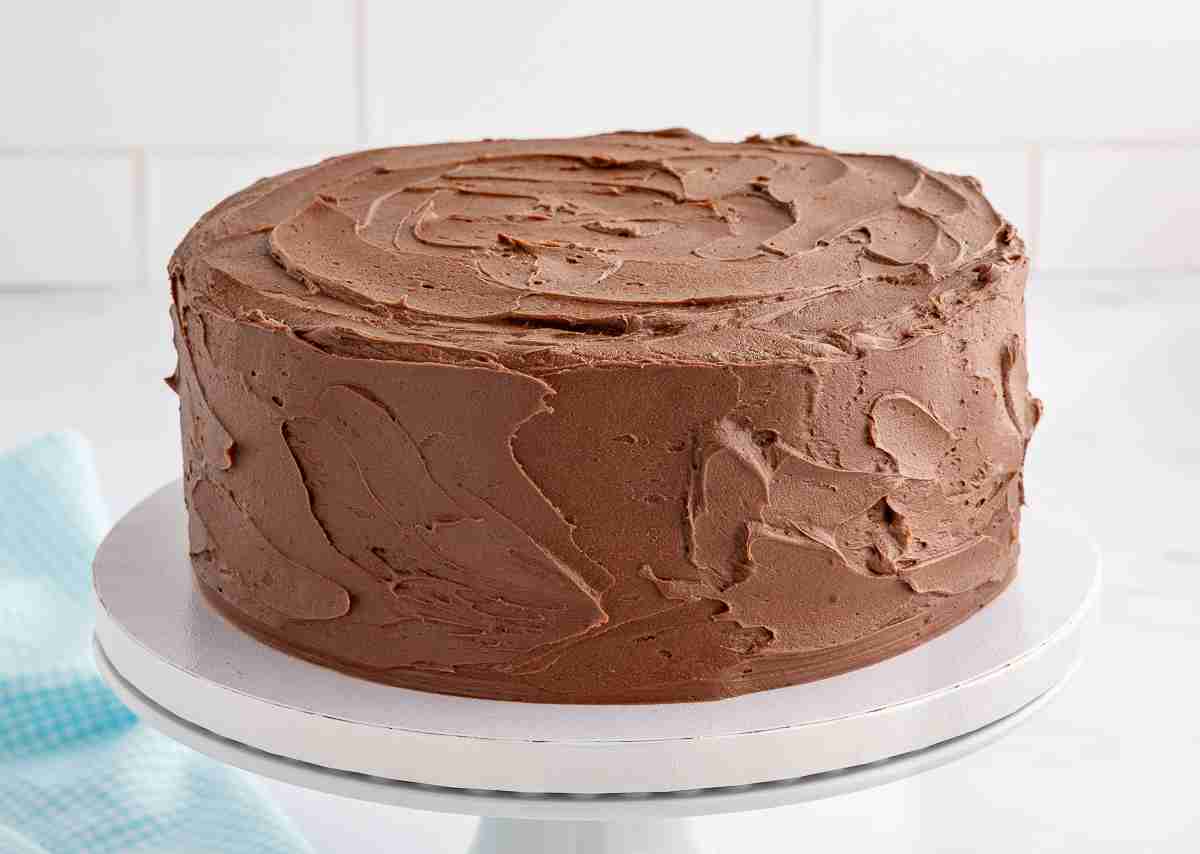
- Once ready to assemble, level each layer to remove any dome. Set the first layer, crust side down, and frost with your chosen frosting or buttercream. Add the second layer and frost the top and sides.
Notes
Pin This For Later